
Study Reveals Tripura’s Rainfall Turns Unpredictable, Rice Fields And Farmers Face Growing Threat
BY RAHUL NAMASUDRA
Tripura is waking up to the threat of increasingly unpredictable rains, as a ground-breaking weather study exposes wide gaps in rainfall distribution and rings alarm bells for the farmers whose lives depend on every drop. The comprehensive research, spanning two decades and examining data from fifteen weather stations across eight districts, has revealed troubling patterns that could reshape how the state manages its most precious resource, which is water.
The five-member research team from Central Agricultural University in Sikkim and Government College Bahadurgarh in Haryana conducted the analysis over twenty years from 2000 to 2019. The team comprised Tanusri Baidya, Dr. Ghanshyam Tikaram Patle, Dr. Mukesh Kumar, Dr. Neetu Kataria, and Bivek Chakma. The study was published on the Current World Environment journal which was received by the journal on January 28, 2025, and accepted on April 3, 2025.
The most alarming discovery concerns Bishalgarh, a weather station experiencing a statistically significant decline in annual rainfall. According to the research findings, Bishalgarh recorded a steep downward trend with a Z-value of -2.64 and a slope decline of 84.1 millimetres annually, marking it as the only location among the fifteen stations to show a statistically significant downward trend.
However, the problem extends beyond just one station. Meanwhile, three other locations including Khowai, Kailasahar, and Chawmanu also showed notable declining slopes, though not at the same level of statistical significance as Bishalgarh.
The monsoon season, which is crucial for Tripura’s agricultural cycle, presents a picture of extreme unpredictability. According to the study, the coefficient of variation for monsoon rainfall ranged from as low as 15.36% at Kailasahar to as high as 83.95% at Udaipur. This massive gap illustrates the stark contrasts in rainfall distribution across the state. The research revealed that Sabroom received the highest mean monsoon rainfall at 1,696.055 millimetres, followed by Udaipur at 1,565.76 millimetres and Bogafa at 1,512.76 millimetres. Conversely, Teliamura experienced the lowest mean monsoon rainfall at just 1,206.07 millimetres, with Sadar at 1,260.72 millimetres and Chawmanu at 1,275.79 millimetres.
Moreover, when researchers examined the northeast monsoon season specifically, they discovered equally troubling variability. Kamalpur recorded the highest coefficient of variation at 78.31%, while Kanchanpur showed the lowest at 42.38%. During this season, Kamalpur received the highest mean rainfall at 239.04 millimetres, followed by Bogafa at 236.18 millimetres and Khowai at 226.38 millimetres. In contrast, Chawmanu received just 162.71 millimetres during the northeast monsoon.
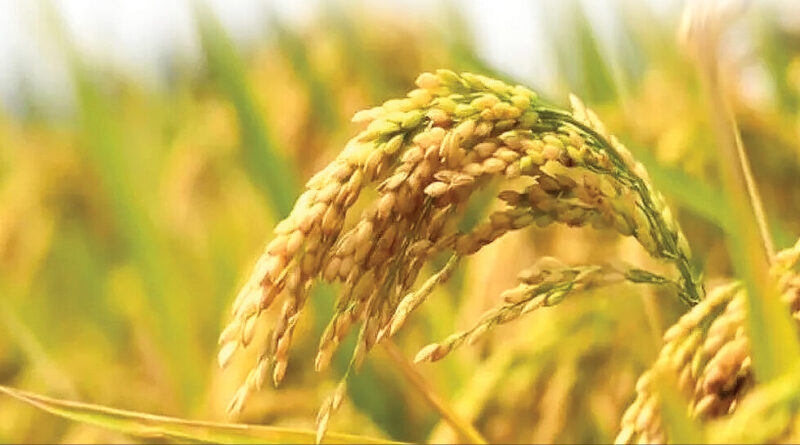
The implications for Tripura’s agricultural sector are profound. According to the research paper, rice cultivation dominates the farming landscape, accounting for 91% of all agricultural land in the state. The state’s population remains heavily dependent on farming as their primary livelihood. Yet the rainfall picture that emerges from the study is one of deep uncertainty. The research indicates that farmers relying on rainfed agriculture may experience inconsistent water availability, affecting sowing periods and crop growth cycles.
The annual rainfall data presents additional cause for concern. Dharmanagar recorded the highest mean annual rainfall at 2,662.16 millimetres, while Bishalgarh recorded the lowest at 1,868.63 millimetres, a difference of nearly eight hundred millimetres emphasizing the vast geographical disparities in water availability. The research showed that Bishalgarh’s annual rainfall varied wildly, ranging from a maximum of 2,939.2 millimetres to a minimum of 854.5 millimetres, with a coefficient of variation of 33.2%.
However, the study also identified locations where rainfall trends show promise. Kamalpur displayed a significant increasing slope of 56.47 millimetres annually, while Udaipur showed an increase of 17.37 millimetres. Yet these bright spots do little to offset the broader concerns about water security across the state.
According to the research findings, the need for improved rainwater harvesting, climate-resilient agricultural practices, and enhanced water storage infrastructure is urgent. The study recommends establishing early warning systems for extreme rainfall events, strengthening flood control measures, and adopting climate-adapted farming techniques. Researchers also noted that sudden heavy downpours coupled with poor drainage infrastructure could result in floods, while prolonged dry spells could lead to drought-like conditions.
This article has been republished from The Ukhrul Times.