
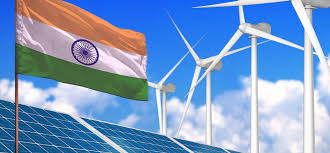
India backs states’ clean energy projects as federal agencies struggle with unsold power
By Sethuraman NR
India’s federal government cannot stop states from building clean energy projects even as federal agencies struggle with nearly 50 gigawatts (GW) of unsold renewable power, a top official said on Thursday.
Federal clean energy projects have remained unsold due to unfinished transmission lines, legal and regulatory delays, Reuters had earlier reported, resulting in state power utilities delaying signing purchase agreements with them.
Some industry representatives had pitched the federal government to stop states coming up with new clean energy tenders and use the unsold power from federal agencies instead.
“Clean energy induction in the country is not necessarily going to happen only through federal agencies,” Santosh Kumar Sarangi, secretary, Ministry of New and Renewable Energy, said at a Confederation of Indian Industry event.
State tenders are going to be primary instruments, going forward, he said, adding that those tenders are tailor-made as per their requirements.
The comments signal a shift from the earlier model where federal agencies played a pivotal role as intermediaries in coming up with tenders and selling power to state utilities.
However, state utilities have been reluctant to buy projects floated by federal agencies, citing higher landed costs when sourcing power from renewable-rich states like Rajasthan and Gujarat, and concerns over transmission delays.
The states are also uncertain over timely delivery of the power due to transmission woes as India’s transmission capacity has been lagging the growth in renewable energy capacity additions.
While there is an unsold inventory of clean energy projects in the country, long-term economic growth would drive a sharp rise in electricity demand and clean energy will play a vital role, Sarangi said, noting the emergence of data centers.
India added a record 31.5 GW clean energy this year as of October and aims to double its non-fossil-fuel-based power output to 500 GW by 2030.
This article has been republished from The Reuters.