
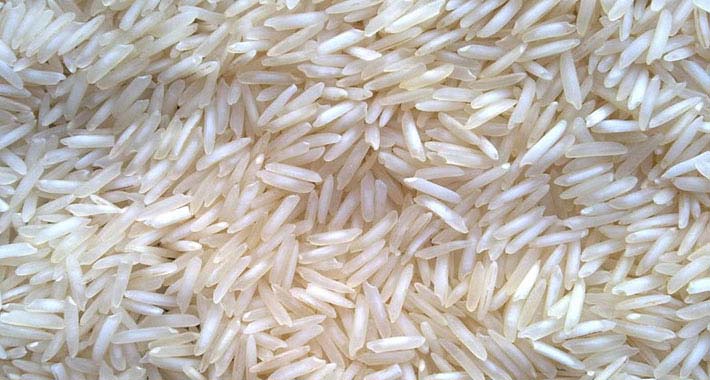
Why have Basmati rice prices fallen upto 10% amid the Iran war
The impact of the ongoing US-Iran crisis is not limited to just oil companies. India’s basmati rice market is also seeing the ripple effect as the tension escalates in the region. It faced unexpected turbulence. Prices of the premium grain have fallen about have fallen 7-10% in the past 72 hours, as per PTI, after exports to the Middle East, one of the biggest markets for Indian basmati, were disrupted. The escalation in the conflict across the region led to the supply disruption.
Industry stakeholders and observers believe that the slowdown in shipments has led to higher volumes being pushed into the domestic market, raising concerns of a sharper price correction if the disruption continues.
Shipments worth thousands of tonnes stuck
The problem is largely logistical. Exporters say around 200,000 tonnes of basmati rice are stuck at Indian ports, and another 200,000 tonnes are stranded in transit as vessels avoid key shipping routes in the Middle East.
Satish Goel, president of the All India Rice Exporters’ Association, told Reuters, about 400,000 tonnes of basmati rice are currently backed up at ports and in transit as exporters struggle to ship consignments.
Exports to the Middle East and other West Asian countries are estimated to account for about 70–72% of India’s basmati export volume of nearly 6 million tonnes in the last fiscal, according to Crisil Ratings.
Basmati rice is considered a staple food in these countries, with a large share of demand being met through imports. The recent developments may lead to delays in shipments and could affect basmati trade volumes in the near term, Crisil said.
If the conflict continues for an extended period, payments from counterparties in these regions could be delayed, which may elongate the working capital cycle for exporters. However, the credit profiles of exporters are expected to remain supported by their healthy balance sheets, Crisil said.
Freight costs double as ships avoid key route
The disruption follows the escalation of the conflict after the US and Israel attacked Iran, triggering tensions across the Gulf region.
According to Reuters, shipping through the Strait of Hormuz, a critical maritime route for trade in the Middle East, has been affected as insurers withdrew coverage for vessels navigating the region. Freight rates for shipments to the region have more than doubled, making exports uneconomical for many traders.
Exporters say they have already moved large volumes of rice to ports but cannot ship them because of rising container costs and the lack of alternative markets to absorb the supply. As a result, many exporters have stopped taking new orders from Middle Eastern buyers and are instead focusing on fulfilling existing contracts.
Exporters seek government relief
As the disruption deepens, exporters have begun seeking urgent government support to cushion the impact of the shipping crisis. The Indian Rice Exporters Federation (IREF) has written to the Agricultural and Processed Food Products Export Development Authority (APEDA), warning that exporters are facing an acute shortage of containers, cancelled vessel calls to the Middle East and sharply rising logistics costs, PTI reported.
According to the federation, international freight rates have already risen about 15–20%, while war-risk insurance premiums and surcharges for Gulf-bound shipments have increased significantly. Bunker fuel costs have also climbed, with marine fuel oil prices rising to about $580 per tonne from around $520 earlier, PTI added.
Exporters say the disruption has also begun weighing on domestic prices. Basmati prices have fallen roughly 7–10% in the past few days, adding to working capital pressures for exporters already dealing with delayed shipments, PTI added. “Our exporters cannot absorb abrupt freight, fuel and insurance shocks while shipments are delayed or rolled,” Dev Garg, vice-president of IREF, told PTI.
PTI added that the federation has sought temporary relief measures, including waivers on port-related charges such as storage and demurrage when cargo is rolled due to vessel cancellations. It has also requested flexibility to redirect cargo already in transit and temporary working-capital support from banks, similar to measures provided during the COVID-19 pandemic.
Exporters have also urged the government to issue an advisory recognising the situation as a force majeure-type disruption, which could help protect them from contractual penalties.
A sharp reversal after a price rally
The fall in prices marks a sharp turnaround for the basmati market. Only a few weeks ago, basmati prices had risen 5–10% in February due to strong export demand, particularly from Iran, exporters told The Economic Times. Iran alone accounts for nearly 40% of India’s basmati rice exports, according to government data.
The surge had come after Iranian buyers stepped up imports amid geopolitical uncertainty in the region. However, the latest escalation in tensions has reversed that trend.
Farmers largely insulated — for now
For now, farmers may not feel the immediate impact of the price decline. Exporters told The Economic Times that most farmers have already sold their produce, meaning the losses are currently being absorbed mainly by traders and exporters holding inventory.
Still, if exports remain stalled and domestic supplies rise further, prices could come under more pressure in the coming weeks. Some exporters, however, believe the slump may only be temporary. “Basmati rice is a staple in the Middle East, and there’s really no substitute for Indian supplies,” a Mumbai-based trader told Reuters. “Once the war is over, these countries will start stocking up again.”
This article has been republished from The Financial Express.