
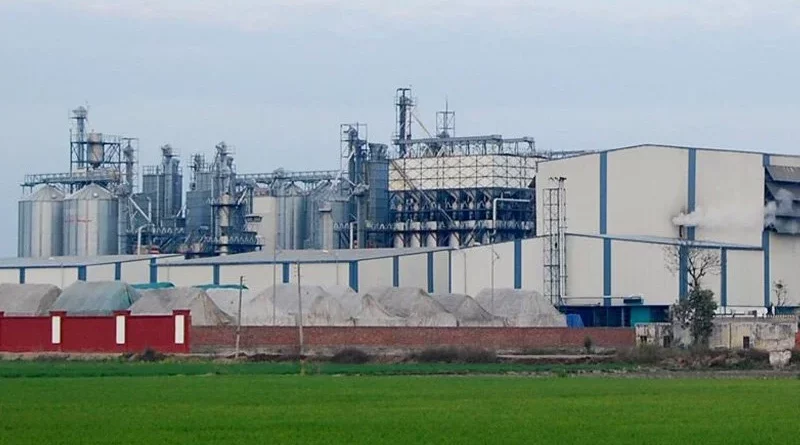
Haryana: How are rice millers able to continue operations despite defaulting on govt deliveries in Karnal
By Parveen Arora
For over a decade, several of Karnal’s rice mills have been defaulting on deliveries of custom-milled rice (CMR) to the government. Yet, they have continued to receive fresh allocations of paddy. A recent probe revealed serious discrepancies in allotments between the 2013-14 and 2024-25 period. Here is what one needs to know about the situation.
After reviewing cases of defaulting rice mills from previous years, Deputy Commissioner Uttam Singh constituted a three-member committee to examine the properties of 58 defaulting millers and their guarantors from 2013-14 to 2024-25. These mills collectively owed around Rs 520 crore. Procurement agencies initiated action, including registration of FIRs, but the crucial step of auctioning properties to recover dues was missing. The gap allowed defaulters to escape financial consequences and, in many cases, secure new allotment under the CMR scheme by changing the names of their mills. The probe found that the lack of property auctions had led to an increase in the number of defaulters.
What role does the authorities’ failure to auction properties play?
When millers default on delivering CMR, procurement agencies can recover dues by attaching and auctioning their assets. Failure to auction weakens recovery. Without auctions, there is no strong financial penalty and defaulters face minimal consequences. They retain control of assets-often with alleged connivance of officials-or shift operations under new names. This encourages others to default since there are no consequences.
Why were attachment and auction proceedings not completed?
As per the report of the committee, procurement agencies did not act swiftly, which allowed millers to transfer their assets. Sources say some millers used their connections to stall or evade enforcement.
What were the lapses in enforcement?
Inspections revealed several mills had changed ownership, been sold or were operating under new names at the same sites. In some cases, properties were not attached, while in others, they were attached but never auctioned. Some properties were even transferred or registered without proper departmental consent, pointing to coordination failures between departments. For a mill situated in Nilokheri, ongoing arbitration was cited as the reason for not attaching the property. However, physical verification indicated that the original owners had already transferred ownership and another unit was currently operating at the site. In another case, a rice mill that defaulted in 2013-14, with dues of approximately Rs 7.75 crore, was found to have been sold in 2019-20. While authorities said that the mill owners had been jailed and later released, field inspections revealed that the land in question had since been levelled and the department concerned no longer held possession of it.
What steps are being taken to resolve the issue?
District Food Supplies Controller Mukesh Kumar said efforts were being made to auction properties and fix accountability for defaults and enforcement lapses. He said the process was under way and all attached properties would soon be auctioned.
This article has been republished from The Tribune.