
Road to energy security passes through our farms
By Ashok Gulati and Subhodeep Basu
The West Asia crisis has exposed a structural vulnerability in India’s growth story: Its heavy dependence on imported fossil fuels. Whether it is power generation, transport or fertiliser production, India’s energy architecture remains deeply import-dependent. For a fast-growing economy, this is not merely a macroeconomic concern; it is a strategic risk.
But energy insecurity is not India’s only challenge. Climate change is increasingly threatening agricultural livelihoods. The forecast of a strong El Niño in 2026 does not augur well for farm incomes. The question, therefore, is not only how India secures its energy future, but also how it builds income resilience for its farmers, who comprise 43 per cent of the workforce. The answer may lie in turning India’s annadata into urjadata, from producers of food to producers of energy, too.
Prime Minister Narendra Modi’s push towards renewable energy is commendable. As of March 2026, renewable energy capacity stood at about 274 GW, with solar alone crossing 150 GW. But the model so far adopted in solar energy is mainly large solar parks and PM Surya Ghar. The PM-KUSUM scheme is basically for solar pump sets. This is not sufficient for agricultural transformation. We lay out below a case for agriphotovoltaics on farmers’ fields that has potential not only to generate clean energy in rural areas but also to halve the government’s power subsidy, while also increasing farmers’ incomes manifold. If promoted by PM Modi on priority basis, it can transform not just agriculture but the very growth story of India. Let us delve a little deeper into it.
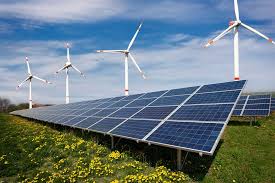
Agriphotovoltaics (Agri-PV) integrate solar power generation and crop cultivation on the same piece of land. This allows farmers to harvest both sunlight and crops. Solar panels are mounted at a height of about 3.5 metres, which permits cultivation beneath them while generating electricity for sale to discoms. The result is dual use of land and dual streams of income.
Unlike agricultural income, which is vulnerable to weather shocks, pest attacks and market fluctuations, solar income is stable . In effect, solar becomes a “third crop” that provides a dependable source of earnings when conventional crops fail.
ICRIER, with support from Kotak Mahindra Bank’s CSR initiative, has created a pilot 600 KW solar plant in Rajasthan. The State Bank of India provided a loan of Rs 1.4 crore, and the farmer himself put in Rs 60 lakh. The project has increased the farmer’s income from about Rs 40,000 per acre from wheat and bajra cultivation to nearly Rs 4 lakh per acre through a combination of energy sales and shade-tolerant horticulture, demonstrating a tenfold income enhancement potential.
The significance of Agri-PV extends beyond farmers’ income. It also addresses a longstanding distortion in India’s power sector. Agriculture consumes nearly 2,60,000 GWh of electricity annually, yet pays tariffs far below the actual cost of supply. According to the Comptroller and Auditor General of India’s recent report, Steering India’s Power Sector Towards Viksit Bharat (2026), the average cost of supplying electricity in India is around Rs 8.5/kWh, and assumed revenue realisation from agricultural consumers close to Re 1/kWh. This implies an effective subsidy of at least roughly Rs 7.5/kWh. India’s annual power tariff subsidy bill is approximately Rs 2.35 lakh crore, with agriculture accounting for roughly 85 per cent. The true cost of power subsidy to agriculture may be even higher as the cost of supply to agriculture is higher than Rs 8.5/kWh, once technical losses, long feeder lines and the costs of maintaining rural distribution infrastructure are taken into account. This would take the farm power subsidy to over 90 per cent of total tariff subsidy. No wonder that, despite repeated reforms and financial bailouts, discom finances remain under severe stress.
Agri-PV offers an opportunity to fundamentally alter this equation. By generating electricity at the farm level and feeding it into local distribution networks, it reduces transmission losses and infrastructure costs while transforming farmers from consumers of highly subsidised power into producers of clean energy. However, scaling Agri-PV requires supportive policy. Elevated structures make Agri-PV systems 15-20 per cent more expensive than conventional solar projects, creating a significant entry barrier for farmers.
A differentiated feed-in tariff of say Rs 4.5/kWh, coupled with targeted support under PM-KUSUM, can significantly improve project viability and accelerate adoption. From the perspective of discoms and state governments, such support should be viewed not as an additional subsidy but as a smarter reallocation of existing expenditure. Even at a feed-in tariff of Rs 4.5/kWh, discoms would be procuring clean power at roughly half the effective cost of supplying power to agriculture. In effect, every unit of electricity generated through farmer-owned Agri-PV has the potential to reduce the subsidy burden by nearly half while simultaneously creating a new source of farm income.
The policy implications are clear. Existing support mechanisms under PM-KUSUM Components B and C already provide capital subsidies for standalone solar pumps and the solarisation of grid-connected agricultural pumps. If public support is considered justified for solarising irrigation, a strong case can be made for extending similar support to farmer-owned Agri-PV projects under Component A that simultaneously generate clean energy and preserve farm incomes. Targeted capital subsidies and an attractive feed-in-tariff can be game-changers, and a win-win for the government as well as farmers.
Institutional innovation will be equally important. Just as milk cooperatives transformed India’s dairy sector, solar cooperatives can aggregate smallholders, improve access to finance, strengthen bargaining power and manage power sales collectively. Such cooperative institutions can become the vehicle through which the Agri-PV revolution can be unleashed.
If PM Modi takes it up on priority, he can not only transform India but also set an example for the Global South, especially Africa, under the theme of “One Sun, One Earth, and One Grid”. That would bring relief from fossil fuels while augmenting farmers’ incomes. Can he do that? Only time will tell.
Gulati is distinguished professor and Basu is research fellow at ICRIER.
This article has been republished from The Indian Express.